
How Deep Are Kitchen Cabinets? (2026 Depth & Size Guide)
When planning your kitchen, knowing how deep kitchen cabinets are is crucial.
Standard kitchen cabinets in the U.S. are typically 24 inches deep for base and tall pantry cabinets, while wall cabinets usually measure 12 inches deep.
This depth ensures ample storage, proper appliance fit, and ergonomic workspace.
But how do these depths vary with cabinet types? What are the ideal dimensions for maximizing storage without sacrificing kitchen flow? How do countertop overhangs and custom options affect cabinet depth? And how can you tailor cabinet sizes to suit your unique kitchen layout?
This article answers these questions and more to help you design your dream kitchen.
Ready to optimize your kitchen space? Let’s dive in.
Key Takeaways
- In the U.S., the standard depth is 24 inches for base cabinets and tall pantry cabinets, while wall cabinets typically measure 12 inches deep—add countertop overhang and you get about 25–26 inches of total work surface depth.
- European standards differ slightly: base and tall cabinets run 60 cm (about 23.6 inches) deep, while wall cabinet depths range from 30–37 cm (roughly 12–14.5 inches).
- Shallow base cabinets measuring 15–18 inches are gaining popularity in 2024–2025 for small kitchens, galley layouts, and improved ergonomics, with sales rising approximately 15% amid compact-living trends.
- Cabinet depth must coordinate with appliances (dishwashers, ranges, refrigerators), countertop overhang, and walkway clearances of at least 36–42 inches so doors and drawers open freely.
- Customizing depth and height—including ADA-compliant options with 34-inch max counter height and 27-inch knee clearance—can dramatically improve accessibility for children, seniors, and people with limited mobility.
How Deep Are Kitchen Cabinets? Quick Overview
When you’re planning a kitchen remodel or simply trying to understand your current layout, knowing standard kitchen cabinet dimensions is essential. The answer to “how deep are kitchen cabinets” depends on which type you’re measuring.
Here’s the quick breakdown:
- Base cabinets: 24 inches deep (about 61 cm) in the U.S., 60 cm in Europe
- Wall cabinets / upper cabinets: 12 inches deep (about 30 cm) in North America, 30–37 cm in Europe
- Tall cabinets / pantry cabinets: 24 inches deep (matching base cabinets) or 12 inches for narrower utility configurations
- With countertop overhang: Total working surface depth reaches 25–26 inches when you add the standard 1–1.5 inch front overhang
When measuring cabinet depth, you’re typically looking at the box depth—from the front of the frame to the back panel. Doors, drawer fronts, and hardware can add roughly 3/4 to 1 inch beyond this measurement.
While these depths represent industry standards for stock and semi custom cabinets in 2025, custom kitchen cabinets can be built anywhere from about 12–30 inches deep to suit specific layouts, unusual appliances, or accessibility requirements.
Standard Kitchen Cabinet Dimensions (Depth, Width, Height)
Understanding kitchen cabinet depth in isolation isn’t enough. Depth works together with width and height to create a functional kitchen layout that coordinates seamlessly with appliances, countertops, and the way you actually move through your kitchen space.
The three main cabinet types each have their own standard dimensions:
- Base cabinets: 24 inches deep, 34.5 inches high (36 inches with countertop), widths from 9–48 inches
- Wall cabinets / upper cabinets: 12 inches deep, heights ranging 30–42 inches, widths from 9–36 inches
- Tall cabinets: 12 or 24 inches deep, heights of 84, 90, or 96 inches, widths from 12–36 inches
Cabinet widths typically come in 3-inch increments (9, 12, 15, 18 inches, and so on up to 48 inches), making it easier for designers and homeowners to mix and match units during a remodel.
For those using metric measurements, UK and EU standards describe base cabinet dimensions at 56–60 cm deep (roughly 22–23.6 inches) and wall units at about 30 cm deep.
Base Cabinet Depths
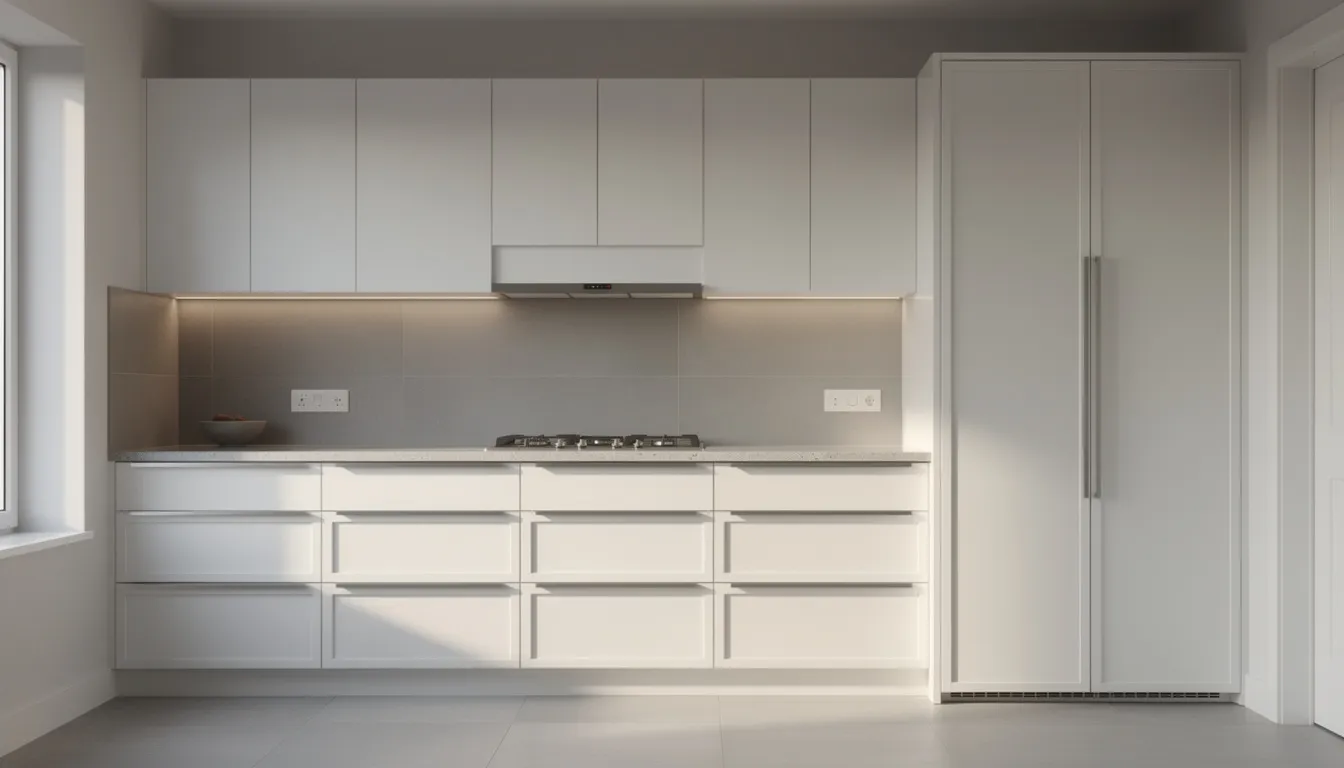
Base cabinets form the foundation of every kitchen. They support countertops, house sinks and cooktops, accommodate major appliances like dishwashers, and provide the bulk of your accessible storage space. This makes base cabinet depth the most critical measurement in your kitchen layout.
Here’s what you need to know about standard base cabinet dimensions:
- The U.S. standard base cabinet depth is 24 inches (about 61 cm), measured from the back panel to the front of the face frame
- This 24-inch depth works seamlessly with standard 24-inch deep dishwashers, ranges, and most cooktops
- European and UK base cabinets are typically 56–60 cm deep (about 22–23.6 inches), still compatible with standard appliance depths once doors and fronts are included
- Interior depth is usually about 23 inches due to back panel and material thickness—factor this when planning what pots, pans, and organizers will fit
- Standard base cabinet height is 34.5 inches without countertop, reaching approximately 36 inches with a typical 1.5-inch thick countertop
- Standard base cabinet widths range from about 9 inches to 48 inches, with narrow 9–15 inch cabinets often used for pull out shelves, spice racks, or tray storage
Standard and Shallow Base Cabinet Depths
While 24 inches is standard, homeowners increasingly choose shallow base cabinets to solve tight walkways or improve flow in galley kitchens.
- The most common standard depth (box only) is 24 inches in the U.S. and 60 cm in the EU, excluding countertop overhang
- With countertop overhang of about 1–1.5 inches, total working surface depth reaches 25–26 inches—this aligns with NKBA guidelines recommending 24-inch deep countertop surfaces with 158 inches minimum total frontage
- Shallow base cabinet options typically range from 12–18 inches deep, with 15-inch and 18-inch versions popular for narrow passages or the back side of kitchen islands
- Shallow bases improve ergonomics and traffic flow in kitchens with tight aisles (36–42 inches between cabinet runs), though they reduce ability to store very large cookware front-to-back
- For elderly users or people with limited reach, shallower bases combined with full-extension drawers reduce bending and overreaching compared with very deep shelves—research by Chen et al. (2024) confirms that standard depths can be impractical without such pull-out mechanisms
Industry data from 2024–2025 shows shallow and modular cabinet options rising about 15% in sales, driven by tiny-home trends and an emphasis on compact, open-feeling kitchens.
Dimensions and Variations in Base Cabinets
Base cabinet depth interacts with height, width, and interior configuration—including drawers, roll-outs, sink bases, and corner cabinets—to determine actual usable storage.
- Typical interior base cabinet depth is around 23 inches, with interior height near 30 inches after accounting for material thickness and any internal mechanisms
- Narrow pull-out widths range from 9–24 inches for spice racks, tray storage, and slim pantry storage
- Standard drawer bases and sink bases typically measure 27–36 inches wide
- Larger drawer banks or cooktop cabinets can extend to 48 inches wide
- A 30-inch base cabinet frequently houses a standard single basin sink, while 33–36 inch bases are more common for double basin sinks or farmhouse sinks, as well as 30-inch ranges
- Deeper base cabinets (27–30 inches) may be used in large kitchens or along one wall of a U-shaped layout, but require careful ergonomic planning to keep items reachable
- For any base cabinet deeper than about 24 inches, use pull out shelves, drawer bases, or internal organizers to prevent items from disappearing at the back—these accessories can increase usable volume by up to 40%
Specialized Base Cabinet Options (Corners and Islands)
Corner cabinets and island cabinets often follow the 24-inch depth standard but use specialized shapes and hardware to make awkward spaces useful.
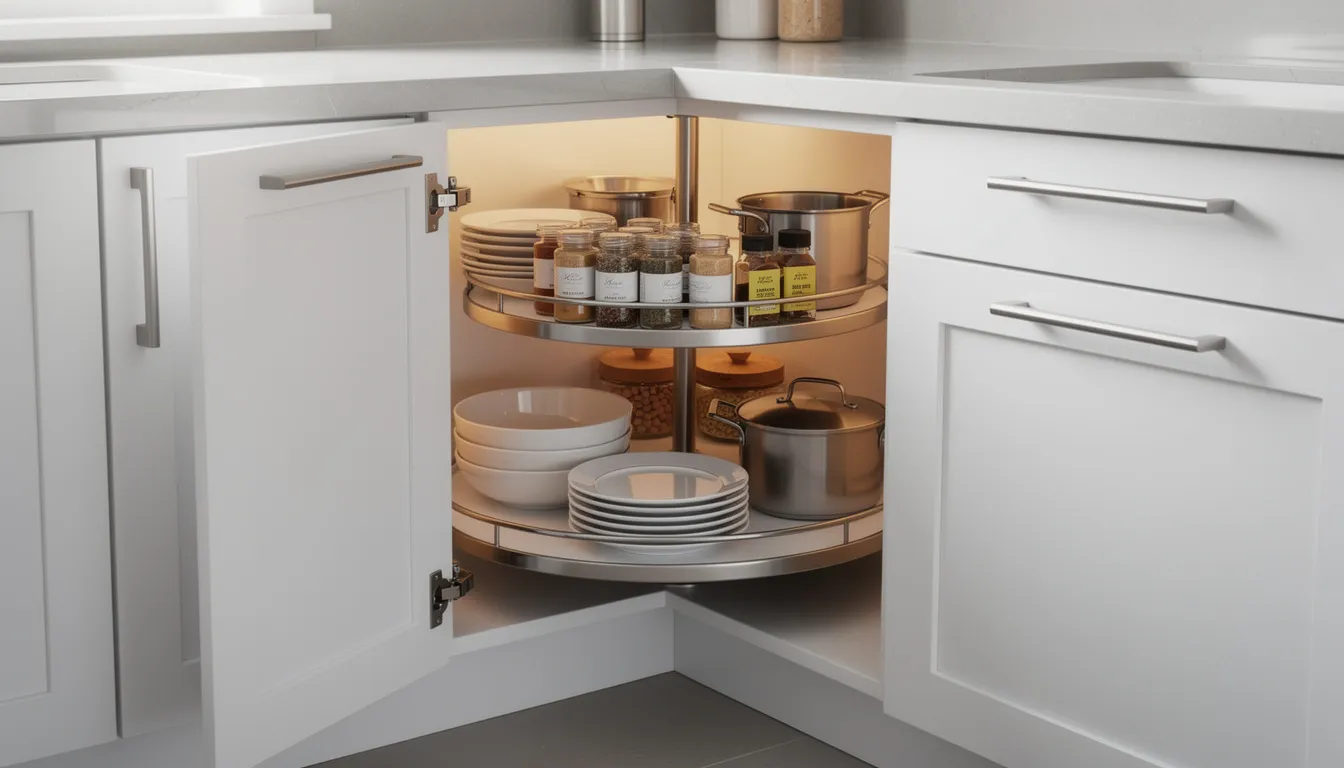
- Standard corner solutions include Lazy Susan cabinets and blind corner cabinets, usually 34.5 inches high and 24 inches deep, with widths in the 33–36 inch range to span the corner
- Lazy Susan units use rotating trays to access deep corner space, boosting accessible storage by approximately 37% compared with fixed shelves
- Blind corner cabinets may use pull-out mechanisms to reach items otherwise buried at the back of the cabinet
- Island cabinets typically mirror wall base units (24 inches) on the working side, while the back of an island often uses shallower cabinets (12–18 inches) to keep the island from feeling too wide
- Island depth is commonly 24–36 inches of cabinetry plus any seating overhang; appliances like dishwashers or sinks installed in kitchen islands must match standard base cabinet depth
- Shallow base cabinets are sometimes placed on dining or hallway-facing sides of peninsulas to provide additional storage without crowding adjacent passageways
Wall and Upper Cabinet Depths
Wall cabinets (also called upper kitchen cabinets) are essential for dishware, glassware, and food storage. Their depth must balance storage space with headroom and visibility of the countertop below.
- The most common standard wall cabinet depth in North America is 12 inches (about 30 cm), keeping the front edge safely behind the countertop edge for comfortable reach
- Wall cabinet depths can range up to 24 inches, but deeper cabinets are generally reserved for installations over refrigerators or as part of tall pantry runs where they won’t interfere with workspace
- Standard wall cabinets come in heights ranging from 30 to 42 inches, with 30-inch units common under 8-foot ceilings and 36–42 inch units (or stacked configurations) used where ceiling height reaches 9 feet or higher
- Wall cabinet widths usually run from 9 to 36 inches in 3-inch increments, with 12–18 inch wide units working well for spices or glassware in tighter spots
- Ergonomic research by Hrovatin et al. (2015) found that wall cabinet efficacy drops by 30% for women at heights over 600 mm (about 24 inches), supporting the preference for 12-inch deep uppers in most kitchen wall applications
- Shelves above 1400 mm (about 55 inches) show significantly reduced visibility and accessibility, particularly for elderly users—shallower depths at these heights help compensate
Customizing Wall Cabinet Depth
Customizing wall cabinet depth is common above appliances and in contemporary kitchens where a flush, built-in look is desired.
- Wall cabinets over refrigerators are often 15–24 inches deep so they align better with deeper fridge cases, improving both storage and appearance
- Wall cabinets can be ordered at 15 or even 18 inches deep along certain walls for added storage, but designers must ensure they don’t extend beyond the countertop edge where people work
- Frameless cabinet systems may visually handle slightly deeper uppers more gracefully, but sturdy wall studs, proper screws, and sometimes steel brackets are essential for heavier loads
- Reserve the deepest wall cabinets for tall users or applications where items are infrequently accessed—use shallower cabinets or open shelves where daily reach is critical
- Deeper wall cabinets at upper heights contradict ergonomic recommendations; Hrovatin et al. suggest maximum 300 mm (about 12 inches) depth at shelf levels above 1400 mm
Considerations for Installation and Clearances
Vertical spacing between countertop and upper cabinets is just as important as cabinet depth for comfortable use.
- The standard distance from countertop to the bottom of wall cabinets is about 18 inches, with common variations from 15–20 inches depending on user height, ceiling height, and whether small appliances sit on the counter
- Wall cabinets are typically hung so their bottom edge is 54 inches above the finished floor when used with 36-inch high base cabinets, creating the 18-inch gap
- Provide extra space (19–22 inches) for tall users or where bulky countertop appliances like espresso machines or stand mixers need to fit underneath
- Deeper upper cabinets must be set carefully to avoid hitting range hoods, microwaves, or backsplashes; side clearances to windows and doors should also be considered
- Under-cabinet lighting, outlets, and backsplash thickness can all slightly impact apparent depth and optimal working space, so plan them together with cabinet installation heights
- Lower upper cabinets can improve accessibility for shorter users, but may reduce counter workspace if they extend too far down
Tall Cabinet Depths and Pantry Storage
Tall cabinets—also called pantry cabinets, utility cabinets, or full height pantry cabinets—are floor-to-ceiling storage units used for food, cleaning supplies, small appliances, or integrated wall ovens.
- In U.S. kitchens, tall kitchen cabinets are most often 24 inches deep to line up with base cabinets, or 12 inches deep for narrower pantry or broom closets
- Standard heights include 84, 90, and 96 inches so they can align with 8-, 9-, or 10-foot ceilings, sometimes with a soffit or crown molding above
- Common widths include 12, 18, 24, and 36 inches, with narrower units ideal for tight spaces and wider ones suited to family-size pantry storage or double oven cabinets
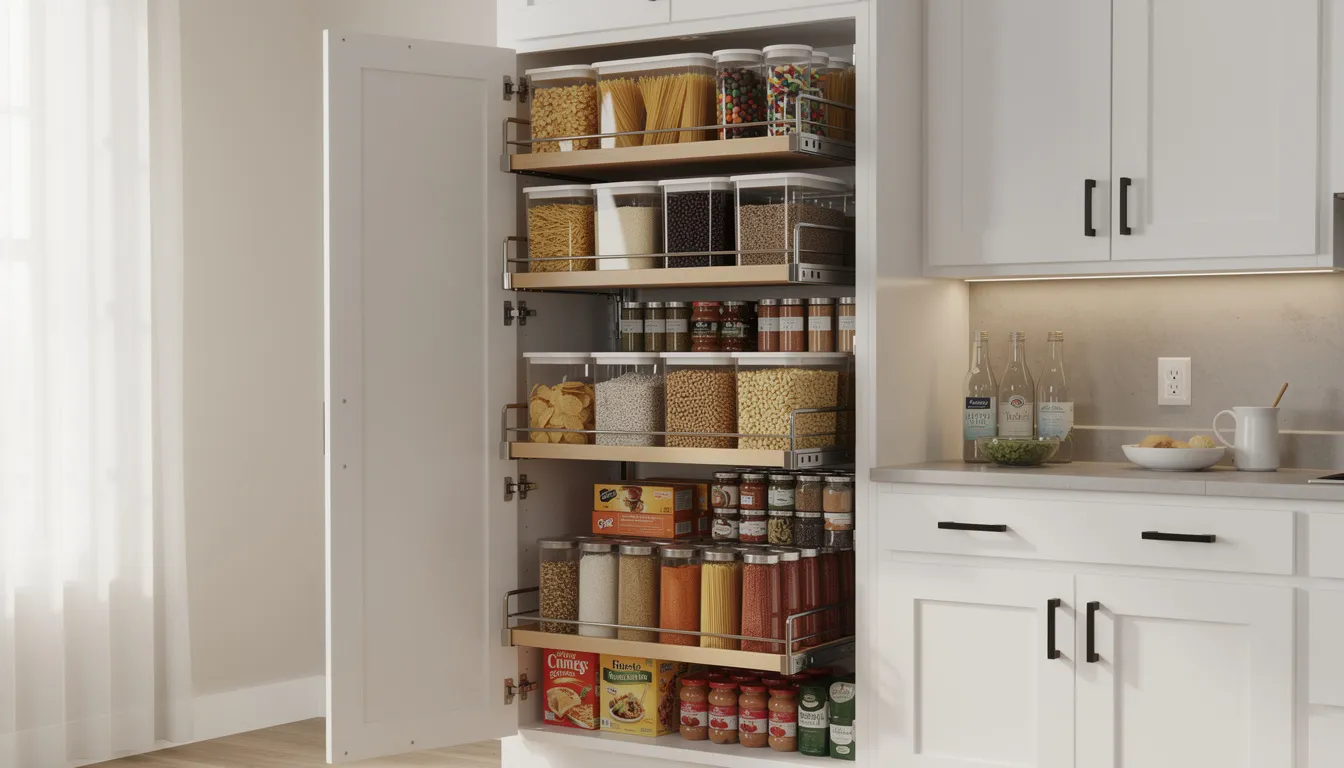
- Many tall cabinets use 14–16 inch deep interior shelves even when the box is 24 inches deep, because shallower shelves keep items visible and prevent food from getting lost at the back
- In EU and UK standards, tall cabinets are typically based on a 60 cm depth, again with internal organizers to maintain ergonomic accessibility
- Specialty appliances like wall ovens and microwave/oven combinations typically require oven cabinets starting at about 30 inches wide with precise interior dimensions per manufacturer specifications
Variations in Width, Depth, and Usage
Depth and width choices for tall cabinets depend on whether they’ll serve as pantries, oven stacks, utility closets, or refrigerator surrounds.
- 12-inch deep tall cabinets are ideal for narrow pull-out pantries where food is stored on shallow shelves or wire pull-outs, making every item visible from both sides
- 18-inch and 24-inch wide tall cabinets are versatile options for general pantry storage, small appliances, and cleaning supplies, often fitted with adjustable shelves or rollout trays
- 24-inch and 36-inch wide tall cabinets can house built-in appliances such as double ovens, microwave/oven combos, or integrated refrigerators, which require precise depth coordination
- Oven cabinets start at about 30 inches wide to fit most standard 27–30 inch ovens, and their interior depth and ventilation space must follow appliance manufacturer specifications
- Accessories like door-mounted racks, full-height pull-outs, or internal drawers help make full use of tall cabinet depth without compromising accessibility
- For refrigerator surrounds, standard 24-inch deep tall cabinets may need panels and spacers to create a truly built-in appearance with 30–36 inch deep refrigerator units
Ergonomics of Deep Pantry and Tall Cabinets
Ergonomic research confirms that very deep and high storage zones reduce accessibility, especially for shorter users and older adults.
- Pantry shelves deeper than about 16 inches often cause items to be forgotten at the back; depths of 14–16 inches are recommended in many 2024 guidelines for everyday pantry items
- Storage above about 60 inches from the floor is better reserved for light, infrequently used items, while heavy objects should be kept between about 32 and 48 inches height where lifting is easier
- Tall cabinets benefit greatly from pull-out trays, full-extension drawers, and vertical dividers that let users access items without reaching into dark corners
- Match pantry depth to user reach—shallower tall cabinets (12–18 inches) may be preferable in homes with elderly residents or people under about 5’3”
- The Hrovatin et al. study (2015) found that shelves above 1400 mm with depths exceeding 300 mm create significant retrieval problems, particularly for women and seniors
- Smart storage solutions like internal lighting and pull-out mechanisms can increase usable cubic footage by 20–30% compared with fixed shelving at the same depth
Customizing Cabinet Depths for Special Requirements
While standards work for most homes, custom cabinets or semi custom cabinets with adjusted depths can solve tricky layouts, unusual appliances, and accessibility needs.
- Typical custom depth ranges: base cabinets from about 21–30 inches, wall cabinets from 10–24 inches, tall cabinets from 12–30 inches—though not all manufacturers support every increment
- Planning depth (the space a cabinet and its hardware occupy, including doors and handles) differs from raw box depth and must be considered in narrow walkways
- In small galley kitchens, reducing base cabinet depth to 21 or even 18 inches may be necessary to maintain a safe walkway of at least 36–42 inches between runs
- Custom cabinetry can help align cabinets flush with deeper appliances like built-in refrigerator/freezer columns, eliminating awkward bumps and gaps
- Filler cabinets in various depths help transition between standard units and walls or appliances
Height Adjustments and ADA-Compliant Depth Considerations
Accessibility standards, especially ADA guidelines, influence both cabinet height and the usable depth under counters for wheelchair access.
- ADA-compliant kitchen counters typically must not exceed 34 inches in height, with at least 27 inches of knee clearance underneath, at a depth of about 19 inches from the front edge for wheelchair users
- Base cabinets under accessible sections may be shallower or omitted altogether to provide this knee and toe clearance, or may use pull-out work surfaces instead of fixed counters
- Upper cabinets in accessible kitchens may be hung lower than the standard 18 inches above the countertop, or replaced with open shelves or lift-down hardware to compensate for unreachable depths
- Design with the primary user in mind—shorter adults, children, or mobility-impaired users often benefit from reduced heights and carefully considered depths, even outside formal ADA projects
- Standard cabinet dimensions assume users between about 5’6” and 5’10”; personal preferences and physical needs should drive decisions about the right cabinet depth and height
Depth Customization for Layout, Appliances, and Islands
Appliance dimensions and kitchen layout often push designers to modify cabinet depths, especially in 2024–2025 kitchens featuring large refrigerators and wall ovens.
- Standard 24-inch deep base cabinets integrate well with 24-inch deep dishwashers and built-in ovens, but many refrigerators are 30–36 inches deep, requiring 24-inch deep tall cabinets plus panels and spacers to appear built-in
- Island depth is influenced by seating needs: 24-inch deep base cabinets plus a 12–15 inch overhang yields a 36–39 inch deep island top suitable for counter seating
- In very small kitchens, base depth may be reduced to 18–21 inches to keep walking space comfortable, while pantry cabinets might be limited to 12–15 inches deep to maintain sightlines
- Always consult appliance installation manuals when planning custom depths around wall ovens, microwaves, and refrigerators to ensure enough ventilation and door swing clearance
- Deeper base cabinets (27–30 inches) can maximize storage in large kitchens but should include full-extension drawer mechanisms to maintain accessibility
Design Innovations and Strategic Placement
Thoughtful variation in depth can add visual interest as well as solve functional problems in your dream kitchen.
- Use deeper cabinets or refrigerator surrounds on one wall, with standard-depth base and wall cabinets on others, to create a deliberate “storage wall” without crowding the whole room
- Stagger cabinet depths vertically—24-inch deep tall cabinets, 24-inch deep bases, and 12-inch deep uppers—to maintain a comfortable working zone and protect headroom
- Running cabinets all the way to the ceiling increases storage but makes the topmost shelves deep and hard to access; reserve these areas for seasonal or rarely used items
- Mix closed deeper cabinets with shallower open shelves in key spots to break up any bulky feeling while still offering ample space along less visible walls
- Current trends favor modular, adjustable interiors that let homeowners customize interior dimensions based on what they actually store
Planning Countertop Overhang and Work Surface Depth
Countertops usually extend beyond cabinet boxes, and this countertop overhang affects how deep your working surface feels and how people move around the kitchen.
- The common front overhang for kitchen countertops is about 1–1.5 inches beyond the cabinet face, bringing a 24-inch deep base to about 25–26 inches total counter depth
- This overhang, combined with a 3–4 inch deep toe kick, allows users to stand close to the counter without hitting their toes or leaning excessively forward
- Island and peninsula seating areas often need 10–15 inches of overhang (depending on seat height) to allow knees to fit under the top comfortably
- Overhangs beside ranges, dishwashers, and refrigerators must be coordinated with appliance door swings to avoid collisions or unusable corners
- NKBA guidelines specify 24-inch countertop depth as standard, with minimum 158-inch total countertop frontage for a functional kitchen
Ergonomics, Storage Capacity, and Kitchen Flow
Cabinet depth directly affects everyday comfort: reach distance, bending frequency, and visual access to items throughout your kitchen.
- Deeper cabinets increase cubic storage volume but also increase reach distance to the back, making items harder to see and grab—especially problematic for upper cabinets and shorter users
- Ergonomic research suggests an optimal reach zone roughly between countertop height and about 48–60 inches above the floor (800–1100 mm), where shelves should not be too deep—ideally near 12–14 inches for wall cabinets
- In base cabinets, drawers and roll-out trays transform deep but hard-to-reach shelves into accessible storage zones, preserving capacity without sacrificing usability
- Cabinet depth affects traffic flow: deeper cabinets or oversized kitchen islands can encroach on walkways, which should remain at least 36–42 inches wide (and wider if two people cook together)
- Think in terms of the kitchen work triangle (sink, cooktop, refrigerator) when planning how deep cabinets and islands should be, avoiding obstructions between these main zones
- The right cabinet dimensions create ample room for cooking, cleaning, and storage without forcing awkward reaching or constant bending

Final Thoughts
Choosing the right depth for your kitchen cabinets is essential for creating a functional, comfortable, and aesthetically pleasing kitchen space. T
he standard cabinet depth of 24 inches for base and tall pantry cabinets, paired with 12-inch deep wall cabinets, offers a proven balance of ample storage, ergonomic access, and compatibility with most appliances.
However, your unique kitchen layout, appliance sizes, and personal preferences may call for custom or semi custom cabinet depths ranging from shallower options (12–18 inches) to deeper configurations (up to 30 inches).
For smaller kitchens or narrow galley layouts, shallower base and wall cabinets improve traffic flow and accessibility, while deeper base cabinets with pull-out shelves or full-extension drawers maximize storage in larger kitchens. Tall pantry cabinets with adjustable depths and smart storage accessories help maintain visibility and ease of use.
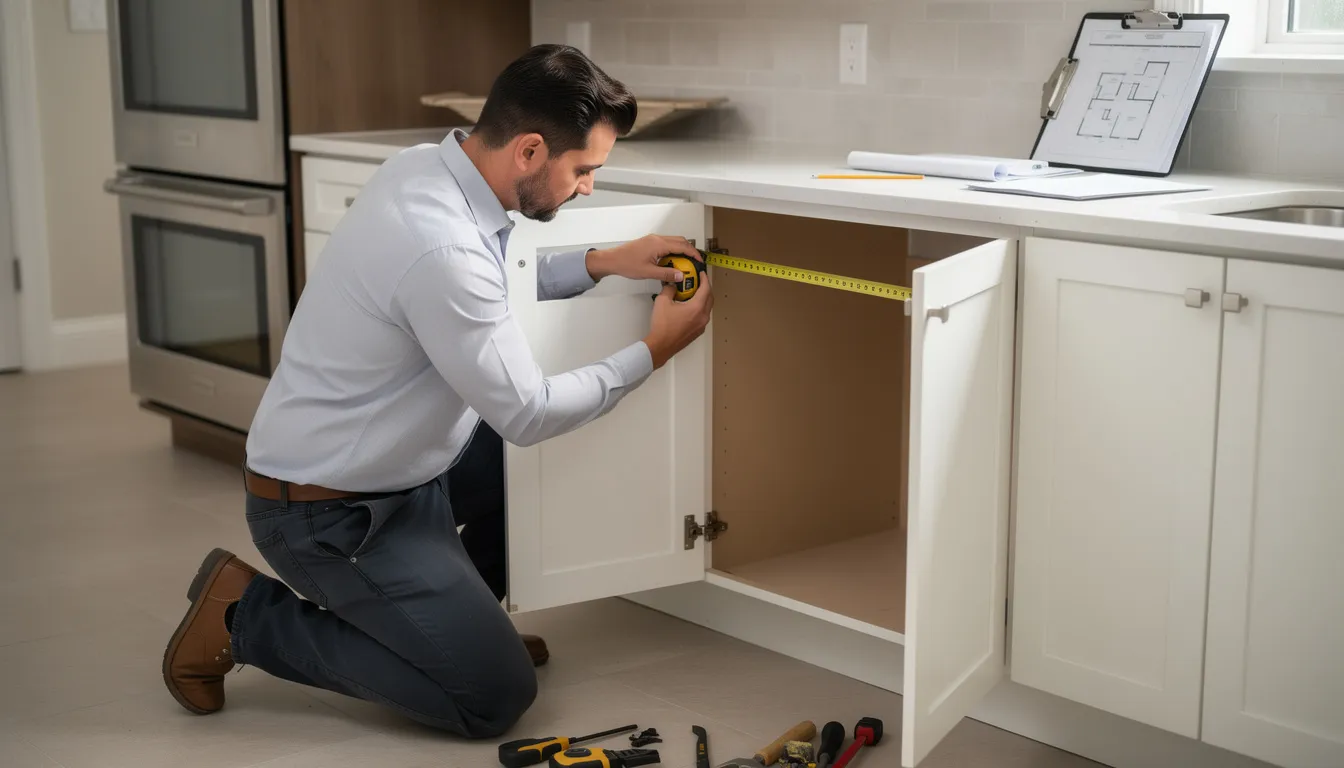
Ultimately, the best solution depends on your kitchen’s size, workflow, and storage needs. Consulting with a kitchen designer can help you tailor cabinet depths and dimensions to optimize your space without sacrificing comfort or style.
Ready to design your dream kitchen with the perfect cabinet depths?
Contact a kitchen design professional today to get expert guidance and start planning a kitchen that fits your lifestyle and maximizes every inch of your space.
FAQs: Kitchen Cabinet Depth
Q1: Can I make my base kitchen cabinets deeper than 24” for extra storage?
Yes, many semi custom and custom lines allow 27–30 inch deep base cabinets. However, they require more floor space and can make it harder to reach the back. Use deeper base cabinets selectively—on one wall or in an island—and pair them with full-extension drawers or pull-outs to maintain accessibility. Research suggests items at depths beyond 24 inches become significantly harder to retrieve without these mechanisms.
Q2: Are 12” deep wall cabinets enough for large dinner plates and glasses?
Most standard dinner plates (10–11 inch diameter) cabinets fit comfortably in 12-inch deep uppers, as do standard drinking glasses and bowls. Oversized charger plates, giant mixing bowls, or large serving platters may need storage in base cabinets, tall pantries, or specially ordered deeper wall units. Cabinets range widely in interior dimensions, so check actual shelf depth before purchasing.
Q3: What cabinet depth is best for a walk-in pantry?
Recommend 14–16 inch deep shelves for most pantry items so contents remain visible and accessible. Consider one deeper shelf (18–20 inches) at floor level for bulk items like large flour bags, beverage crates, or pet food. This approach balances storage capacity with the ability to actually find and reach what you need—a key principle for any pantry storage design.
Q4: How deep should cabinets be in a very small galley kitchen?
Consider 21-inch or even 18-inch deep base cabinets on at least one side to maintain a 36–42 inch walkway for comfortable movement. Use 12-inch deep uppers to keep the space from feeling cramped while still offering useful storage. Shallower cabinets combined with smart storage solutions like pull out shelves can make a compact kitchen surprisingly functional.
Q5: Do I need custom depth cabinets for a counter-depth refrigerator?
Counter-depth refrigerators are specifically designed to align with standard 24-inch deep base cabinets plus doors, so full custom depths usually aren’t necessary. However, a kitchen designer may add 3/4–1.5 inch filler panels or slightly deeper side panels to create a truly “built-in” appearance. The correct cabinet depth around refrigerators depends on the specific model’s dimensions and ventilation requirements.