
How Much Does It Cost To Remodel A Kitchen In 2025 Like A Chef
Have you ever asked yourself: “how much does it cost to remodel a kitchen?”
Well, you’re not alone.
Kitchen remodel costs can range from $10,000 for minor upgrades to over $65,000 for major overhauls, with the national average around $27,000.
Several factors influence these costs, including kitchen size, material choices, and labor.
In this article, we’ll explore these aspects to help you budget effectively.
Key Takeaways
- Kitchen remodeling costs in 2025 have increased, with typical total remodel budgets ranging from approximately $51,700 to $138,000, depending on project scope and location.
- Minor remodels now average around $27,600, focusing mostly on cosmetic upgrades like paint and hardware.
- Midrange kitchen remodels hover near $79,300, while major remodels can reach $156,400 or more, especially with custom cabinetry and high-end finishes.
- Costs per square foot range roughly between $150 to $250, varying significantly by region and kitchen size.
- Common mistakes to avoid include underestimating costs and sacrificing quality for cheaper materials, which can lead to higher long-term expenses.
Understanding Kitchen Remodeling Costs

Kitchen remodeling costs can vary widely depending on the scope of the project and the choices you make. Key cost considerations include:
- Minor remodels focus on surface upgrades and average about $27,600, covering painting, hardware, backsplashes, and some appliance updates.
- A midrange kitchen remodel typically costs around $79,300, including cabinet replacements and mid-level appliances.
- Major remodels, such as full gut jobs with custom cabinetry and high-end appliances, can easily climb above $150,000.
- Remodeling costs usually land between $150 and $250 per square foot, depending on kitchen size and quality choices.
- Location matters too. Urban areas tend to push prices higher due to increased labor and materials costs.
Note that costs are estimates for 2025 and may vary by 10-20% based on your specific situation.
Whether you’re planning a minor facelift or a complete overhaul, understanding these costs is crucial for effective budgeting.
Kitchen remodels are generally categorized into minor, mid-range, and major projects. Minor kitchen remodels, often focusing on cosmetic changes, usually average a budget of $25,000 to $30,000.
Mid-range renovations usually start from $65,000 to $80,000, which when you compare it with major kitchen remodels, may involve structural changes, custom furniture, and premium materials, ranging from $135,000 to $150,000 or more depending on your taste.
Knowing where your project falls on this spectrum will help you set realistic expectations and plan accordingly.
Minor Kitchen Remodel Costs
Minor kitchen remodels are perfect for those looking to refresh their space without breaking the bank. These projects typically cost between $25,000 and $30,000 and focus on cosmetic updates such as:
- Painting,
- New hardware,
- Lighting,
- Backsplashes,
- Limited appliance upgrades.
Refacing kitchen cabinets in a standard 10×10 kitchen can be expensive. The cost is usually between $10,000 to $23,000.
Major Kitchen Remodel Costs
If you’re aiming for a complete transformation, a major kitchen remodel might be in order. These projects fall between $20,000 and $65,000. For instance, a major renovation of a small kitchen could start at a minimum of $50,000. These remodels often involve significant changes such as:
- Moving walls,
- Replacing plumbing,
- Installing custom cabinetry,
- Installing high-end appliances.
Upscale major kitchen remodels can exceed $150,000 nationally for those dreaming of a luxurious kitchen. These projects might include custom cabinets, stone countertops, and premium appliances.
While the investment is substantial, the result is a truly bespoke full kitchen remodel that meets the highest standards of quality and functionality.
Want to join the moving train? Transform your kitchen into a personalized masterpiece by working with skilled remodelers who understand your vision.
Return on Investment (ROI) for Kitchen Remodels
Kitchen remodels consistently rank among the home improvements that add significant resale value. Consider the following:
- On average, a kitchen remodel increases house value greatly, making it a wise investment.
- The return on investment (ROI) can vary depending on the scope of the project.
- Minor kitchen remodels often offer a higher ROI compared to major renovations.
An upscale kitchen renovation can average around $158,530, but the ROI might not be as high as expected.
Minor Remodel ROI
Minor kitchen remodels tend to provide a high return on investment, making them a worthwhile consideration for homeowners. A minor kitchen renovation usually offers a return of 70% to 80% on the initial investment.
In some cases, the ROI can be as high as 95%, making it a smart choice for those looking to increase their home value without a major financial outlay.
Major Remodel ROI
While major kitchen remodels involve a larger investment, they can still offer a substantial return. The average ROI for major kitchen remodels is between 55% to 70%. Factors such as the size of the kitchen, selection of products, and the overall scope of the project can influence the ROI.
Not just that. High-end remodels tend to recover about 50% to 60% of their total investment.
A focus on quality materials and design functionality, will definitely help you maximize your return.
Key Factors Influencing Kitchen Remodel Costs

Many factors are responsible for influencing your kitchen remodelling costs. Let us consider them in more detail:
Size of the Kitchen
Kitchen size is quite an important factor that significantly affects remodeling costs. Larger kitchens naturally require more materials and labor, which can drive up the price. For instance, the cost range for remodeling a 200-square-foot kitchen is usually between $15,000 to $50,000.
Conversely, a small kitchen remodel typically falls within the cost range of $5,000 to $20,000.
This is why planning accordingly is very important, whether your kitchen is small or large.
Material Choices
Different materials come with varying price tags, and your selections can impact your budget. For example, laminate countertops are generally less expensive compared to marble or granite.
Similarly, stock cabinets cost less than custom cabinetry. Opting for cheaper materials can save money upfront, but considering their long-term durability and aesthetics is equally important.
Choosing high-quality materials may increase your initial investment but can provide better longevity and aesthetic appeal. However, it’s key to strike a balance between cost and quality to avoid frequent replacements or repairs.
Labor Costs
Labor costs are a huge part of kitchen remodeling expenses, averaging around 17% of the total budget. These costs can vary depending on your geographic location, with urban areas generally experiencing higher labor rates due to demand and cost of living.
Design Choice
Your choice of design is of course a major determinant. There are many affordable, beautiful, and functional designs you can choose from that will satisfy your taste and your budget without compromising on quality.
Managing these expenses can involve planning your remodel during off-peak seasons or using online resources to compare the right contractor bids. Good planning and research can help find cost-effective labor solutions.
2025 Kitchen Trends and Their Cost Implications
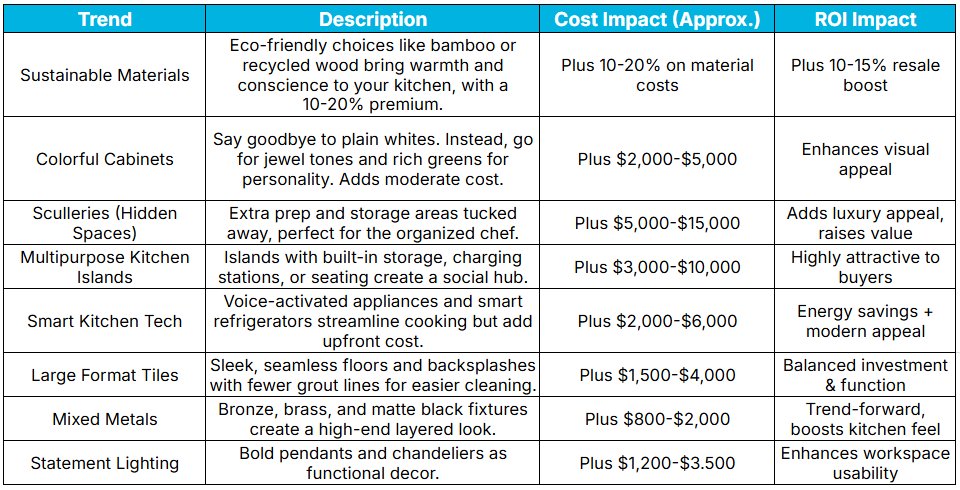
As you plan your remodel, here are some of the hottest trends this year and how they might impact your budget:
Budget Allocation for a Kitchen Remodel
A common guideline suggests spending near 10% to 15% of your home’s value on the kitchen remodel, often with a 10% target plus a 5% contingency. Key areas to consider include:
- Cabinets
- Countertops
- Appliances
- Flooring
Each of these accounts for a specific percentage of your total budget.
To help you budget smarter, here’s a detailed breakdown of typical kitchen remodel components and their average cost ranges in 2025:

Costs may vary based on kitchen size, finish quality, and geographic location. For example, smart tech appliances can add over $1,000 to electrical expenses.
Regional Variations in Kitchen Remodel Costs

Regional differences can lead to variations in kitchen remodeling expenses. For example:
- The average cost of a midrange kitchen remodel in the Pacific region is about $82,810.
- In the South Atlantic region, it is approximately $78,153.
- Homeowners in states like California and Massachusetts typically incur higher expenses for kitchen renovations.
These differences highlight the importance of considering geographic location when planning your kitchen remodel.
Northeast vs. Northwest
In the Northeast, the cost range is approximately $10,800 to $40,400, making it more budget-friendly compared to other regions. In contrast, the Northwest typically sees kitchen remodel costs ranging from $25,600 to $61,100.
These regional disparities reflect differences in material and labor costs, as well as local economic conditions.
Urban vs. Rural Areas
Urban areas generally experience higher labor costs due to higher demand and cost of living. Material costs can also differ, with urban areas often having greater access to a variety of materials and suppliers, affecting pricing.
Overall, the distinction between urban and rural locations impacts the total budget for kitchen remodeling.
Common Mistakes to Avoid During a Kitchen Remodel
Embarking on a kitchen remodel can be a complex process, and avoiding common mistakes is fundamental for a successful project.
- Underestimate Expenses: Many homeowners fail to account for the total cost, including hidden fees and unexpected expenses, which can quickly add up and derail the budget.
- Sacrificing Quality for Cost: Choosing cheaper materials and labor to save money can lead to higher long-term costs due to frequent repairs and replacements. However, opting for energy-efficient appliances and durable materials may have a higher upfront cost but can save money over time and increase home value.
- Poor Planning: Moving plumbing or electrical work can significantly increase labor costs and cause unexpected delays. Sticking to the same layout or making minimal changes can help keep the project on budget and timeline.
- Poor Communication: Not obtaining multiple quotes or checking past projects of potential contractors can lead to hiring the wrong contractor, resulting in subpar work or delays. It’s important to thoroughly vet contractors, ask for references, and review their portfolios to ensure they meet your standards.
- Unexpected Delays: Failing to plan for unexpected delays and ordering materials late can extend the project timeline and increase costs. Proper planning, including ordering materials early and allowing for contingencies, helps avoid these issues and leads to a smoother remodel experience.
By being aware of these common mistakes and planning accordingly, you can avoid costly setbacks and enjoy your brand new kitchen with confidence.
How to Save Money on Your Kitchen Remodel Budget

Saving money on your kitchen remodel is possible with strategic planning and smart choices. Some ways to reduce costs include:
- DIY work, such as removing old cabinets, picking up materials, and painting walls to save on labor costs.
- Using budget-friendly materials.
- Choosing efficient, mass-market appliances to keep costs down during the remodel.
- Consider financing as an option on approved credit. You can finance a partial or full amount on your next renovation for your home.
- Ready-to-assemble or stock cabinets can lead to considerable savings. This choice is more cost-effective than custom options.
- Picking up remodel materials instead of having them delivered can help avoid extra delivery fees.
Whether you decide to immediately pay out of your pocket or finance it so you can pay gradually over time, these strategies can help achieve a beautiful kitchen without overspending
DIY Demolition
Doing some demolition work yourself can also reduce labor costs, making your kitchen remodel more budget-friendly. Homeowners can handle tasks like removing cabinets, tearing out flooring, or taking down drywall to save money.
Wearing appropriate safety gear, such as gloves, goggles, and a dust mask, when performing demolition tasks prevents injuries. Maintaining a clean workspace and managing debris disposal can ensure an efficient demolition process.
Refinishing Cabinets
Refinishing cabinets can significantly reduce costs compared to purchasing new cabinetry, which can account for about 29% of the total remodel budget. Opting for cabinet refinishing allows homeowners to achieve a fresh look without the expense of entirely new cabinets.
Refinishing cabinets generally costs less than new cabinets, making it a budget-friendly option.
When refinishing, evaluate the condition of your current cabinets and choose finishes that improve their aesthetics.
Choosing Laminate Countertops
Laminate countertops are a popular budget-friendly alternative to natural stone options, allowing homeowners to achieve a high-end look at a fraction of the cost. Laminate countertops offer a wide variety of designs, ease of maintenance, and resistance to stains and scratches.
On an average, laminate countertops can cost between $20 to $50 per square foot, making them way cheaper compared to natural stone which can start at $60 per square foot.
When selecting laminate countertops, consider thickness, finish, and style to ensure they complement your kitchen design.
Summary
Remodeling a kitchen in 2025 can indeed be an exciting venture, whether you’re a culinary enthusiast or simply looking to increase your home’s value.
Armed with this knowledge, you’re now ready to embark on your kitchen remodeling journey with confidence and creativity.
Take the first step today. Join thousands of other homeowners turning their kitchens into stunning, functional spaces.
Frequently Asked Questions
What is the average cost range for a kitchen remodel in 2025?
The average cost range for a kitchen remodel in 2025 is between $14,591 and $41,535, with a national average of approximately $26,972. This can help you budget effectively for your renovation project.
How much does a minor kitchen remodel cost?
A minor kitchen remodel usually costs between $10,000 and $20,000, primarily involving cosmetic changes such as paint, hardware, and lighting. This investment can significantly enhance the space’s appearance without a complete overhaul.
What factors influence the cost of a kitchen remodel?
The cost of a kitchen remodel is primarily influenced by the size of the kitchen, the materials selected, and labor expenses. Careful consideration of these factors can help you budget effectively.
How can I save money on my kitchen remodel?
To save money on your kitchen remodel, consider doing some of the demolition work yourself, refinishing existing cabinets, and opting for budget-friendly materials such as laminate countertops. These strategies can significantly reduce your expenses while still achieving a refreshed look.
What is the return on investment for a minor kitchen remodel?
A minor kitchen remodel generally yields a return on investment of 70% to 80%, with potential ROI reaching up to 95% in some instances. This makes it a financially sound decision for enhancing your home’s value.