
8 Key Indicators of When to Replace Windows in Your Home
Wondering when to replace windows in your home? This article covers clear signs that indicate it’s time for a replacement.
Key Takeaways
- Key indicators for replacing windows include drafts, condensation between panes, operational difficulties, visible damage, high energy bills, excessive outdoor noise, water leaks, and windows over 15-20 years old.
- Replacing windows improves energy efficiency, soundproofing, and can increase property value by up to 15%.
- Proper planning and professional installation are essential for a successful window replacement project, ensuring optimal performance and longevity.
Recognizing the Signs for Window Replacement
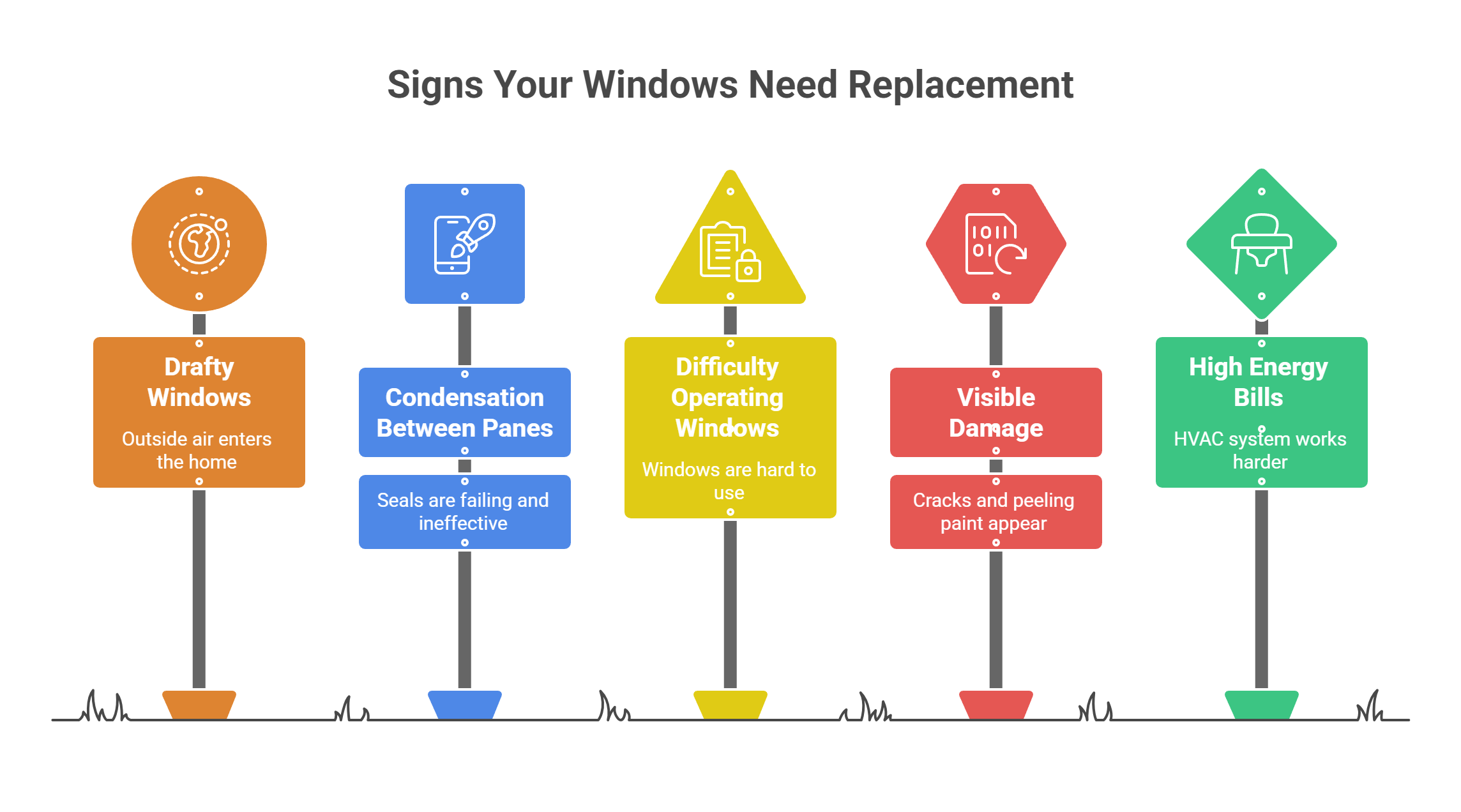
Identifying when to replace your windows is not to be overlooked when it comes to maintaining energy efficiency and home safety. There are always signs to look out for especially around the window seals and frames. What you should consider is visible damage like cracks and peeling paint, and poor insulation amongst others.
Other signs to look out for include:
Drafty Windows
Drafts usually result from gaps around the frame or deteriorating seals, letting outside air enter. Upgrading to energy-efficient windows can greatly add to comfort and lower energy costs.
Choosing energy-efficient options can lead to significant energy savings and a more comfortable living space. These options include:
- Dual pane windows,
- Insulated glass options,
- Energy Star certified windows,
- Correct installation.
These improvements strengthen efficiency by easing the load on your HVAC system to maintain consistent temperatures.
Condensation Between Panes
Condensation between the panes of your double or multiple pane window is a clear sign of seal failure. This issue often leads to foggy glass, which not only obstructs your view but also indicates that your windows are no longer insulating effectively.
Ignoring this can worsen insulation and increase the risk of moisture damage, making window replacement necessary.
Difficulty Operating Windows
Windows that are hard to open or close are also something to watch out for as they can be unreliable during emergencies and prevent proper ventilation. Sticking or jamming windows may result from dust build-up, deteriorating frames, or shifting foundations, all of which necessitate prompt replacement of a broken window.
Visible Damage
Visible damage like cracks, peeling paint, or other signs mentioned above are also a pointer to replacement. Overlooking these signs means that you’ll further expose yourself to potential safety hazards, leading to window damage. Regular inspections help catch issues early, keeping your windows safe and functional.
High Energy Bills
If your heating or cooling costs have been steadily rising without changes in usage, your windows may be the culprit. Inefficient windows allow heat transfer, forcing your HVAC system to work harder. Replacing with energy-efficient models can reverse this trend and provide long-term savings.
Excessive Outdoor Noise
Hearing more traffic, neighbors, or street sounds than before? Older windows often fail to block noise effectively, especially if seals are worn. Double- or triple-pane windows can significantly reduce sound infiltration, creating a quieter home environment. This is particularly noticeable in urban areas and signals declining insulation performance.
Water Leaks or Moisture Intrusion
Water seeping in during rain, or signs of mold and mildew around frames, indicate failed seals or poor installation. This not only damages interiors but can lead to structural issues if ignored. Prompt replacement prevents costly repairs and maintains indoor air quality.
Windows Are Outdated or Over 15-20 Years Old
Most home windows last 15-30 years, depending on material and maintenance. If yours are approaching or exceeding this age, they likely use outdated technology like single-pane glass, leading to inefficiency. Even without visible issues, proactive replacement ensures modern benefits like better UV protection and security.
The Benefits of Replacing Your Windows
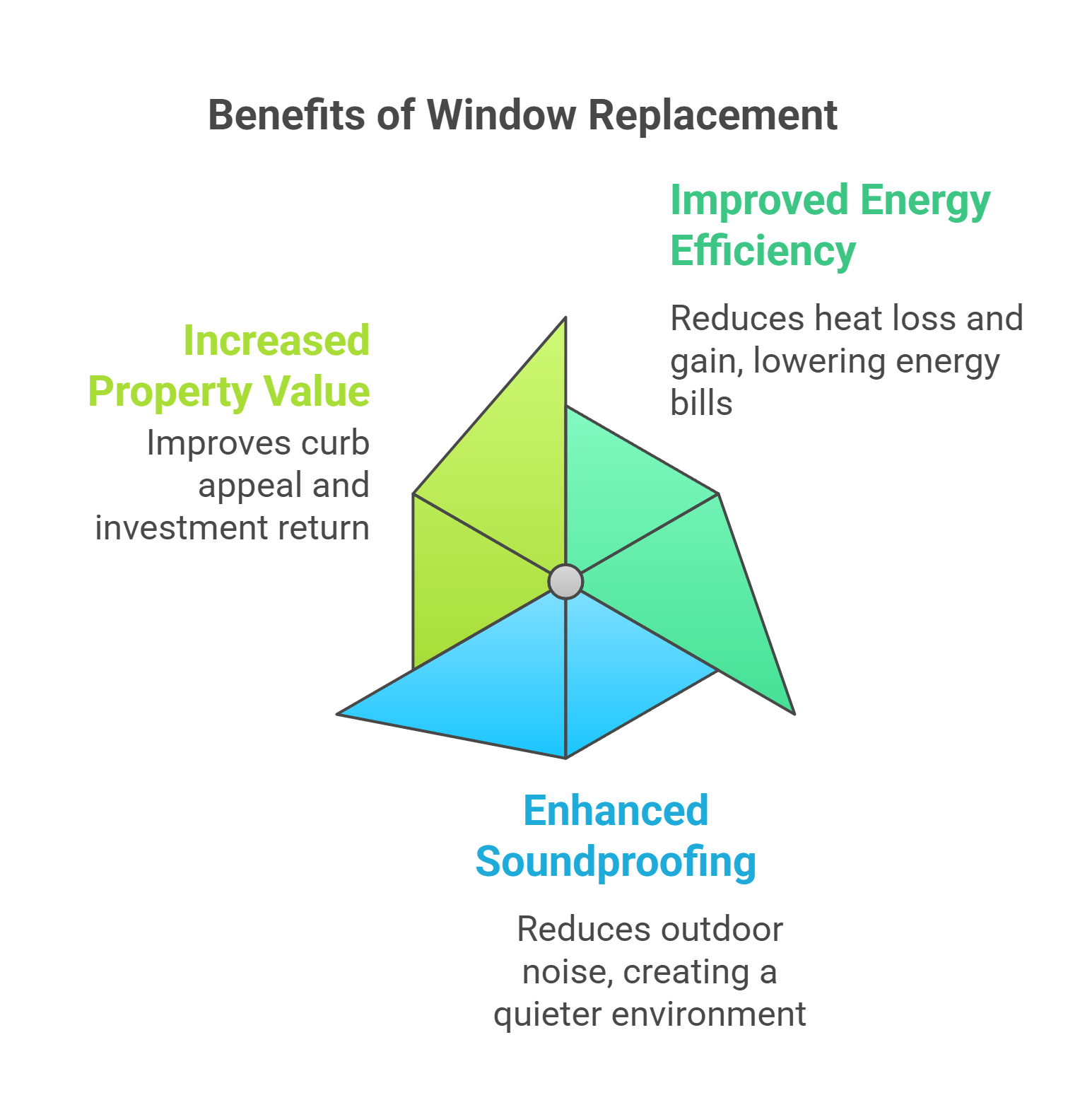
Replacing windows offers numerous benefits beyond improving your home’s appearance. The following are advantages that it offers:
Improved Energy Efficiency
One of the most significant benefits of replacing your windows is improved energy efficiency. Modern windows, especially those with energy star certification, are designed to minimize heat loss and gain, helping you save on energy bills.
Materials like vinyl and fiberglass offer excellent insulation properties, while features like Low E glass coatings reduce heat transfer, keeping your home comfortable year-round.
New, energy-efficient windows help maintain consistent indoor temperatures, reducing HVAC strain and lowering cooling costs and energy costs.
Enhanced Soundproofing
Modern windows are also an added advantage in soundproofing your home. Upgrading to double or triple-pane windows with insulated glass can reduce outdoor noise, often by 50% or more, depending on the setup, creating a quieter and more peaceful indoor environment, especially if you live in a busy or noisy area.
Increased Property Value
Investing in new windows can also upgrade your property’s value:
- Modern, energy-efficient windows improve curb appeal.
- They allow you to recoup up to 85% of your investment through increased property value.
- Outdated window styles can detract from your home’s attractiveness, indicating the need for an upgrade and contributing to poor appearance.
New windows are aesthetically pleasing, and more than that, they improve functionality and efficiency, making your home more appealing to buyers.
Choosing the Right Replacement Windows
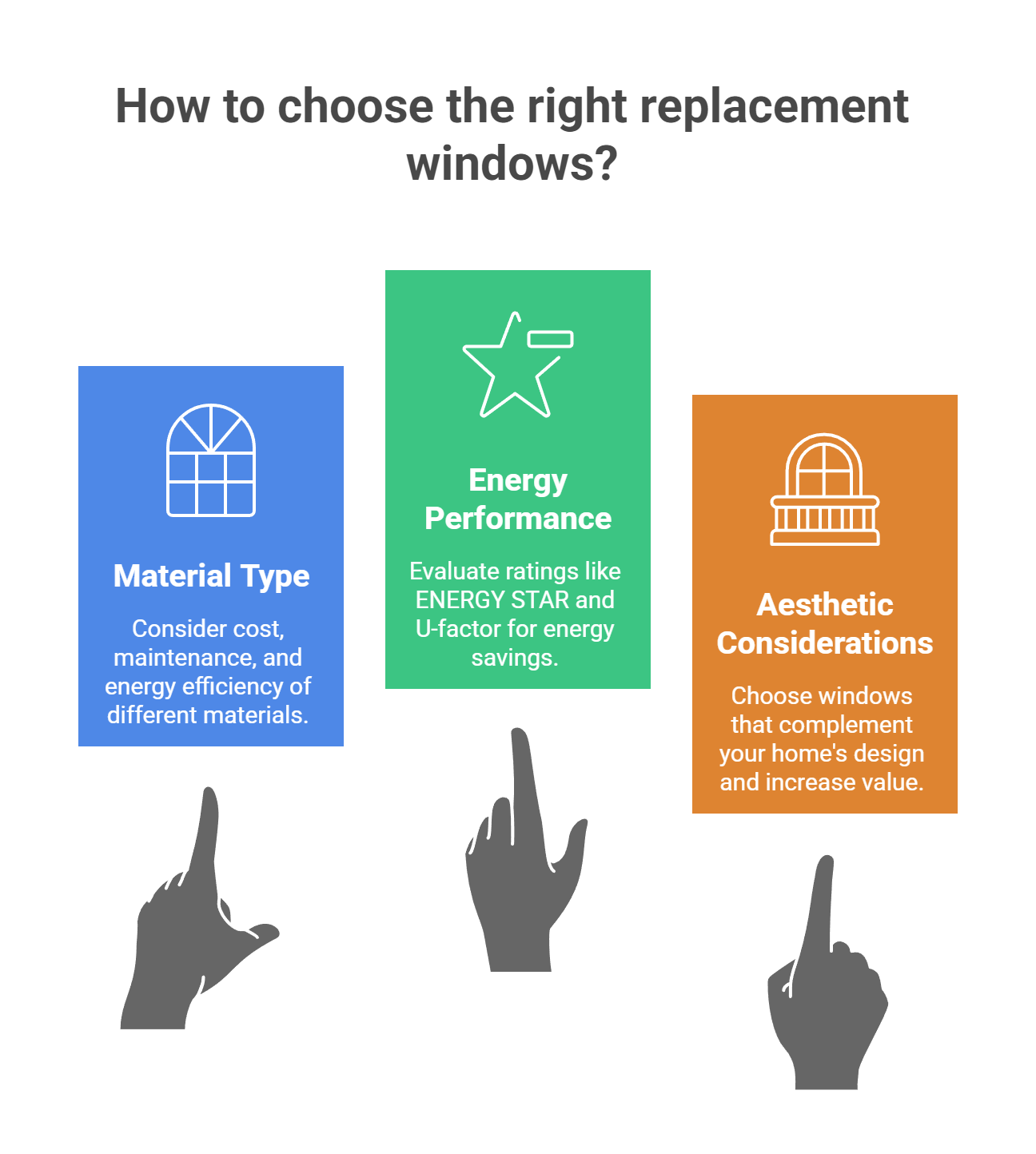
So how do you know what decision to make when choosing new windows? The following section provides answers to that question.
Material Types
Some common options to consider include:
- Vinyl windows: cost-effective, low maintenance, and good energy efficiency.
- Wood: offers a classic look but requires more upkeep.
- Composite materials (like fiberglass): provide durability and efficiency.
Aluminum windows, though less insulating, are strong and lightweight, making them suitable for specific applications.
Energy Performance Ratings
Energy performance ratings determine a window’s effectiveness in reducing energy consumption. Key features include:
- ENERGY STAR certification, indicating compliance with strict EPA guidelines.
- Low E glass, which offers better insulation.
- A low U-factor, which reduces heat transfer.
The solar heat gain coefficient (SHGC) is another important rating, indicating how much solar radiation is admitted through the window. A lower SHGC value means less heat enters your home, improving cooling efficiency in warmer climates. Knowing these ratings helps you choose windows with optimal energy performance for your needs.
Aesthetic Considerations
Consider how replacement windows will complement your home’s design. Frame materials like vinyl, wood, and aluminum offer different aesthetics and performance, increasing overall home value.
Timing Your Window Replacement Project
Timing is key for a successful window replacement project. Spring and fall are ideal seasons due to mild temperatures and better contractor availability. Thorough planning during these times ensures a smooth and efficient installation process.
Best Seasons for Replacement
Spring is often regarded as the best season for replacement windows due to favorable weather conditions and shorter lead times. Fall is also a suitable time, offering mild temperatures that support effective sealing and caulking.
Planning Your Project
Planning ahead is key for a successful window replacement project. Getting multiple quotes from different contractors can help you make informed decisions and secure the best pricing. Moreover, securing a free estimate early avoids scheduling conflicts during peak demand.
Consider the age of your current windows when planning. Most residential windows last 15-30 years, after which efficiency declines even without obvious damage. If yours are nearing this range, scheduling a replacement can prevent sudden failures.
Cost Considerations for Window Replacement
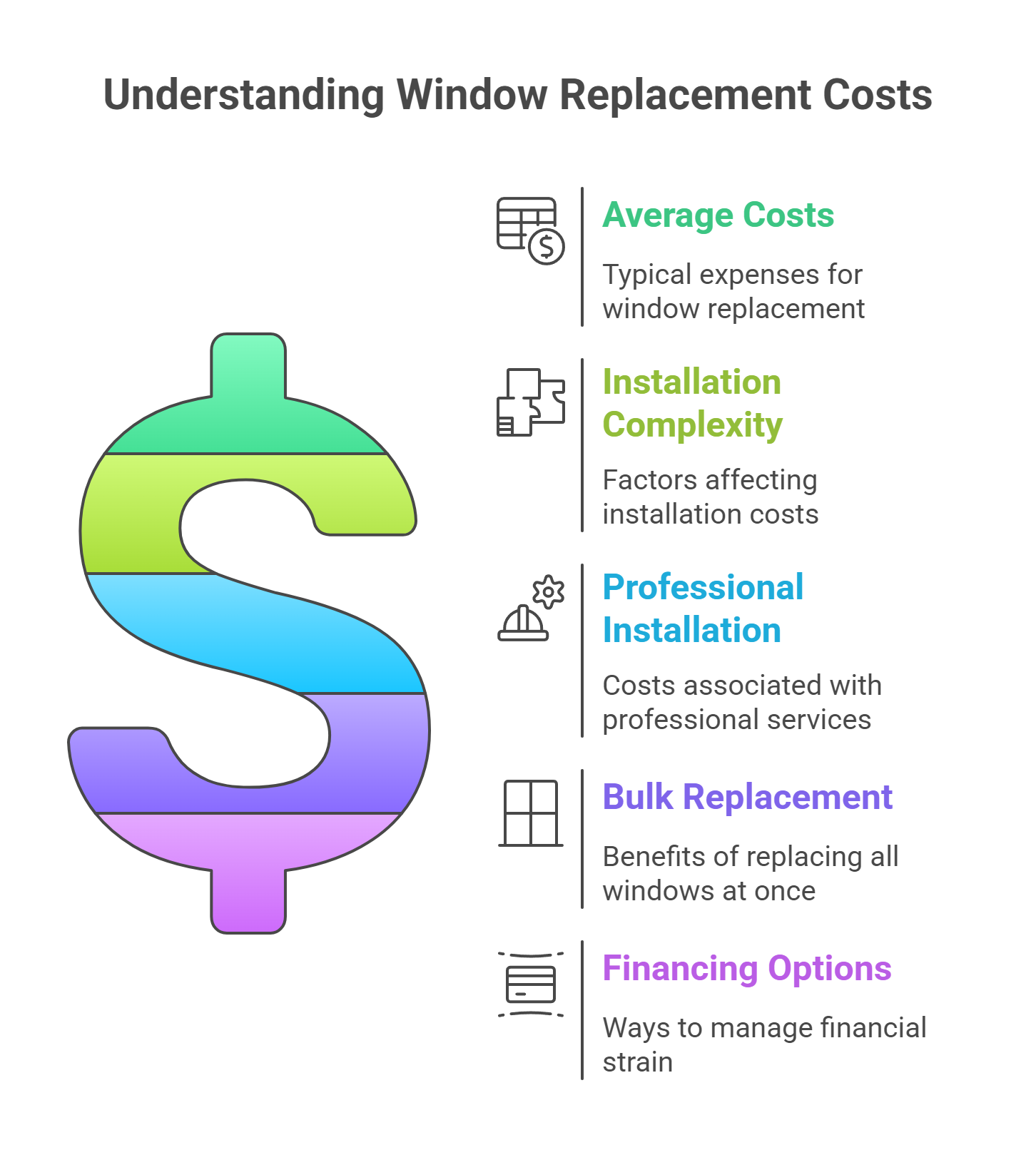
Cost is a key factor in planning a window replacement project. Understanding the costs helps budget effectively and make informed decisions.
Average Costs
The average cost for replacing a window is approximately $554, with prices typically ranging from $500 to $750 per unit. Factors like installation complexity can lead to varying costs, with professional installation averaging between $100 and $300 per window.
Scheduling a free in-home consultation with us can help you understand the specific costs for your project.
Usually, the hack is to replace all your windows at once. The reason is because they are more cost-effective due to bulk pricing and reduced labor fees. Another reason is that it ensures a consistent look and performance throughout all your windows.
Financing Options
Homeowners can reduce financial strain by exploring various financing options available for window replacement. Some manufacturers and window companies offer financing plans with low or no interest for the first year, making replacement more accessible.
Also, loans or credit lines tailored for window replacement projects can help save money and manage costs.
Professional Installation Matters
The role of professional installation ensures new windows function properly and last longer. Not just that, you save more and enjoy a performance that is worth your money. Poor installation on the other hand can reduce energy efficiency, promote mold growth, and pose safety risks.
However, one thing is needed for maximum results:
Hiring a Qualified Contractor
When hiring a contractor, consider the following steps:
- Verify their credentials.
- Get multiple bids to compare prices and services.
- Read online reviews.
- Seek referrals from trusted sources to identify reputable contractors.
All of these processes are to make sure that the contractor has valid licenses and insurance mitigates risks during installation.
Maintenance Tips for New Windows
Now that you have new windows installed, what do you do to extend their lifespan and keep them functioning well? Find out below:
Regular Cleaning
Regular cleaning maintains window functionality and appearance. Use a gentle glass cleaner and a microfiber cloth to avoid scratches while cleaning. Clean window tracks every two to three months to prevent debris buildup that can hinder functionality.
Inspecting Seals and Frames
Regular inspections of seals and frames catch and address issues early, prolonging lifespan. Drafts around frames or sashes indicate poor insulation, compromising energy efficiency. Condensation between glass panes signals broken seals, leading to decreased insulation and potential moisture damage.
If you notice any of these mentioned during routine inspections, it’s important to address them quickly before they become costly repairs.
Summary
Recognizing the signs that indicate it’s time to replace your windows, such as drafts, condensation between panes, difficulty operating, visible damage, high energy bills, excessive noise, water leaks, and age over 15-20 years should prompt you to consider window replacement.
The benefits of new windows, including energy efficiency, improved soundproofing, and increased property value, are substantial. The right replacement windows as well as timing your project well, you can ensure a smooth and cost-effective installation.
Take action now to enjoy a more comfortable and energy-efficient home.
Frequently Asked Questions
How do I know when it’s time to replace my windows?
It’s time to replace your windows if you notice drafts, condensation between panes, difficulty in operation, visible damage, high energy bills, excessive outdoor noise, water leaks, or if they are over 15-20 years old.
What are the benefits of replacing my windows?
Replacing your windows provides immense benefits such as energy efficiency, improved soundproofing, and a potential increase in property value. Investing in new windows can also lead to long-term savings and a more comfortable living environment.
What materials are best for replacement windows?
Vinyl and wood are excellent choices for replacement windows due to their durability and aesthetic appeal, while aluminum and composite materials like fiberglass provide unique benefits in cost and maintenance. Choosing the right material depends on your specific needs and preferences.
When is the best time to replace windows?
The best time to replace windows is during spring or fall, as the mild temperatures facilitate installation and contractors are typically more available.
Are there financing options available for window replacement?
Yes, numerous manufacturers and window companies provide financing options to assist with the costs of window replacement. This can make the project more manageable for homeowners.